

To renew ITINs for an entire family, you complete a separate Form W-7 renewal for each family member but submit all applications together with one family tax return. This coordinated approach allows families to process multiple renewals simultaneously, keeping all ITINs valid for future tax filings while managing documents and costs efficiently.
| Factor | Details |
|---|---|
| Who needs renewal | Check each family member's expiration status individually |
| Applications required | Separate Form W-7 for each person |
| Tax return | Usually, one family returns with all renewals attached |
| Best strategy | Renew everyone simultaneously (all at once) |
| Cost (IRS direct) | Free regardless of family size |
| Cost (CAA services) | $100-500 per person typically (family discounts may apply) |
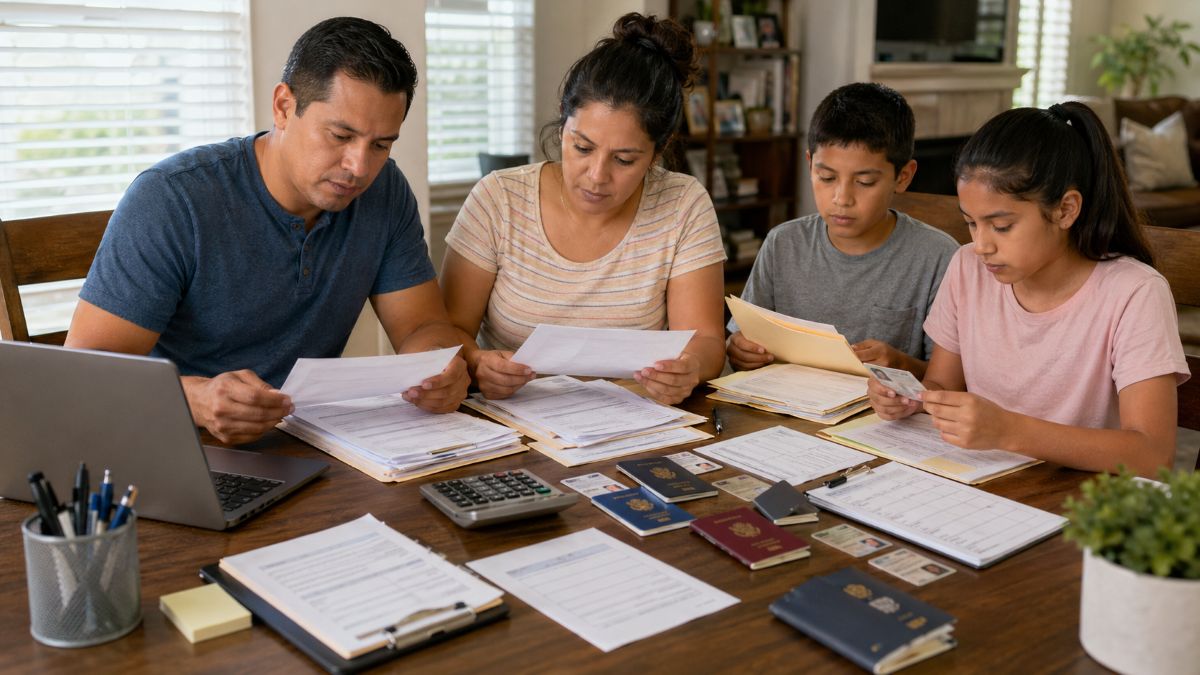
Family ITIN renewal involves coordinating the renewal process for multiple household members who need updated Individual Taxpayer Identification Numbers. This typically includes spouses, children, and sometimes other dependents who are claimed on the family's tax return. The process requires completing separate applications for each person while submitting everything together as one coordinated package.
Unlike individual renewals, where one person handles their own application independently, family renewals require careful coordination of multiple forms and documents. Each family member must complete their own Form W-7 renewal application, but the entire family can submit these applications simultaneously. This coordinated approach prevents timing issues and ensures all family members have valid ITINs for the upcoming tax year.
The term "family renewal" doesn't mean there's a special family application form available from the IRS. Instead, it refers to the strategic coordination of multiple individual renewal applications to process them together efficiently. This approach is particularly beneficial for families who file joint returns or claim multiple dependents on their tax forms.
Most families choose this coordinated approach because it simplifies document management and ensures consistent processing timelines for all members. The alternative would be to renew each person's ITIN separately, which creates coordination problems and potential delays in tax filing.
Processing multiple renewals together offers significant administrative advantages for families who file joint tax returns or claim multiple dependents. When all family members renew simultaneously, the tax return can be filed with complete ITIN information for everyone. This prevents delays caused by some family members having valid ITINs while others are still waiting for renewal processing.
Document gathering becomes much more efficient when handled as a single coordinated effort rather than separate renewal attempts for each person. Families can organize all required paperwork in one session, schedule a single CAA appointment, and manage the entire process together. This reduces the administrative burden significantly compared to handling multiple separate renewals throughout the year.
The cost efficiency of family renewals becomes apparent when using professional services like Certifying Acceptance Agents for document authentication. Many CAA providers offer family discounts or package pricing that reduces the per-person cost for larger families. A single family appointment also saves time compared to scheduling separate appointments for each family member.
Tax filing coordination becomes much simpler when all family ITINs are renewed together and ready at the same time. This prevents situations where some family members have valid ITINs while others are still pending, which can delay tax filing. Having all renewals complete simultaneously allows families to file their returns as soon as tax season opens.
Every family member's ITIN expiration status must be checked individually since each person received their ITIN at a different time. The middle digits of each ITIN determine the expiration year, with ITINs containing middle digits 70-99 and 83-89 having expired. Additionally, any ITIN not used on a tax return for three consecutive years becomes expired regardless of the middle digits.
Primary taxpayers should review their own ITIN first by checking the middle digits and confirming whether they filed tax returns. If the ITIN contains expired middle digits or wasn't used on returns filed in 2022, 2023, or 2024, renewal is required. The same verification process applies to every other family member, including spouses and dependents who were previously claimed on family returns.
Spouses who don't work still need valid ITINs if they're included on joint tax returns or claimed as dependents. Their ITIN expiration follows the same rules as working family members, based on the middle digits and recent usage. Even non-working spouses must renew expired ITINs if the family plans to file joint returns for the current tax year.
Children's ITINs expire independently of their parents' renewal status, following the same middle digit and usage rules. Each child's ITIN must be checked separately, as siblings often received their ITINs in different years and may have different expiration dates. ITIN renewal services can help families verify each member's status accurately before beginning the renewal process.
Renewing all family ITINs simultaneously represents the most efficient approach for families who file joint returns or claim multiple dependents. This strategy involves completing Form W-7 renewal applications for every family member at the same time and submitting everything together. The primary advantage lies in having all ITINs valid simultaneously, preventing coordination problems during tax filing season.
Administrative efficiency improves dramatically when families handle all renewals together rather than managing separate renewal timelines for each member. Document gathering occurs once for the entire family, reducing the time spent organizing paperwork and scheduling appointments. Professional services like CAA appointments can accommodate entire families in single sessions, saving time and often reducing costs through family pricing.
Timeline coordination becomes automatic when all family members renew together since their applications process through the IRS simultaneously. This prevents situations where parents have renewed ITINs but children's renewals are still pending, or vice versa. Tax return filing can proceed smoothly once all family members receive their CP 565 renewal notices from the IRS.
The cost structure for simultaneous renewal often works out favorably, especially when using professional services that offer family discounts. While the upfront cost might seem higher, families avoid paying separate service fees for individual renewals throughout different time periods. Free estimates can help families understand the total cost for coordinating everyone's renewal together.
Staged renewal involves renewing family members' ITINs at different times based on immediate need or budget constraints. This approach might work for families where only some members need urgent renewal for the current tax year. However, staged renewals create ongoing coordination responsibilities and potential complications for future tax filings.
Budget considerations sometimes make staged renewals attractive since families can spread costs across multiple years rather than paying for everyone simultaneously. This approach allows families to prioritize urgent renewals while delaying others that aren't immediately necessary. However, the long-term costs often exceed simultaneous renewal when accounting for multiple professional service appointments and administrative time.
Administrative complexity increases significantly with staged renewals since families must track different renewal timelines for each member. Parents need to remember which children need renewal in which years, potentially missing deadlines that could affect tax filing. The coordination effort required often outweighs the initial budget savings, especially for larger families.
Most families find that simultaneous renewal eliminates these recurring coordination problems permanently and provides better long-term value. The upfront investment typically saves money and administrative effort compared to managing multiple renewal cycles over several years.
| Method | Cost for Family of 4 | Timeline | Pros for Families | Cons for Families |
|---|---|---|---|---|
| Mail to IRS | Free (postage ~$10) | 7-11 weeks processing + 60 days document return | No fees; direct IRS | Mail 4 sets of originals; 3+ months without documents |
| CAA Services | $400-2,000 total ($100-500/person) | 7-11 weeks processing; keep originals same day | One family appointment; keep all originals; professional review | Service fees; must find CAA |
| IRS TAC | Free | 7-11 weeks processing; keep originals same day | Free; keep originals | Weekday hours only; limited locations; longer appointments |
IRS direct mailing costs remain free regardless of family size, requiring only postage expenses for sending renewal applications. Families save money using this method but accept the trade-off of being without original documents during processing. Large families don't pay more to the IRS, making this method attractive for budget-conscious families who can manage without documents temporarily.
CAA service pricing typically operates on a per-person basis, with many providers offering family discounts for multiple renewals processed together. Adult renewal fees generally range higher than children's fees, with some CAA providers charging less for minors. Family package pricing or volume discounts can reduce the per-person cost significantly for larger families.
Professional service value becomes apparent when considering the time savings and error prevention benefits for families managing multiple renewal applications. CAA providers review each family member's application for completeness and accuracy, preventing costly delays from mistakes. The convenience of keeping all original family documents often justifies the service fees for families who travel or need documents regularly.
Budget planning should consider the long-term value of having all family ITINs renewed and valid for many years ahead. Professional services often prevent errors that would require reprocessing applications, potentially saving money in the long run. Professional consultation can help families understand the true costs for their specific situation.
STEP 1: Create a master family checklist
□ List all family members needing renewal
□ Note each person's current expired ITIN number
□ Verify expiration reason (middle digits or non-use)
□ Identify specific documents needed for each person
STEP 2: Gather shared family documents
□ Complete family tax return for current year
□ Marriage certificate (if name changes involved)
□ Children's birth certificates showing both parents
□ Any court documents for name changes or adoptions
STEP 3: Complete Form W-7 for each person
□ Download Form W-7 for each family member
□ Check "Renewal" box (line 6e) on every form
□ Enter the correct expired ITIN for each person (line 6f)
□ Parent signature for children under 18
Color-coding systems help families maintain organization when managing multiple renewal applications with numerous documents for each person. Assign each family member a specific color folder, envelope, or document sleeve to prevent mixing paperwork between applications. This visual organization system reduces errors and makes it easier to verify that each person's application is complete.
Labeling strategies should include clear identification of each family member, their relationship to the primary taxpayer, and their current expired ITIN. Each packet should also include a checklist showing which documents are included and which might still be needed. This systematic labeling prevents confusion during the application assembly process and helps verify completeness.
Physical separation of each person's documents prevents the common mistake of including one family member's documents in another's application packet. Use paper clips rather than staples to keep each person's materials together while allowing easy access for review. Separate dividers or sticky notes can mark each family member's section when assembling the complete submission package.
Digital backup systems protect families against lost documents during the application process since renewal applications involve mailing important original documents. Scan or photograph all documents for each family member before submission, organizing digital files by person. This backup system provides security and helps track which documents were submitted for each family member.

Family renewal verification requires checking each member's ITIN expiration status individually before beginning the renewal process. Review middle digits for each family member's ITIN and confirm whether each person appeared on tax returns filed in 2022, 2023, or 2024. Create a master list showing which family members need renewal and which might be renewed proactively for convenience.
Method selection depends on family budget, document security needs, and scheduling availability since different approaches offer distinct advantages. CAA services provide convenience and document security but cost more, while IRS direct mailing saves money but requires sending originals. Consider family travel needs and document availability when choosing between professional services and DIY approaches.
Document gathering involves ordering birth certificates for all children under 18 and marriage certificates for name changes or spousal verification. Many vital records offices offer discounts for multiple birth certificates ordered simultaneously from the same location. Plan extra time for document delivery, especially if ordering from different states or requiring expedited processing.
Timeline establishment helps families coordinate renewal activities with tax filing deadlines and family scheduling needs. Starting renewal processes during the summer or fall allows plenty of time for processing before tax season begins. Build buffer time into planning since family renewals involve more moving parts than individual applications.
Form W-7 completion requires careful attention to detail since each family member needs their own correctly completed renewal application. Download current forms from the IRS or through tax services to ensure using the most recent version. Complete forms systematically, checking the renewal box and entering each person's expired ITIN accurately.
Tax return preparation coordinates all family members' renewal applications since the family tax return will be submitted with all renewal forms. Include all family members being renewed on the tax return, entering either their expired ITIN or "Applied For" in the appropriate fields. Paper filing is required when submitting renewal applications, so electronic filing options aren't available during renewal years.
Application assembly follows specific organization requirements to help IRS processors efficiently handle family renewal submissions with multiple W-7 forms and document sets. Place the completed family tax return first, followed by each family member's W-7 and supporting documents in separate groups. Use paper clips to keep each person's materials together while avoiding staples that complicate processing.
Submission method execution depends on whether families choose professional CAA services, IRS Taxpayer Assistance Center appointments, or direct mailing to the IRS. CAA appointments typically accommodate entire families in single sessions lasting one to two hours for document authentication and submission. Professional services allow families to keep all original documents while submitting certified copies to the IRS.
Standard family renewal processing follows the same 7-11 week timeline as individual renewals when applications are submitted correctly with complete documentation. The IRS processes each family member's renewal application individually, but coordinated submissions typically move through the system around the same timeframe. Families should expect all renewal notices to arrive within a few weeks of each other when everything processes normally.
Seasonal variations significantly affect processing times, with renewals submitted during peak tax season (January-April) taking longer than those submitted during slower periods. Summer and fall submissions often process faster, making these periods ideal for family renewal coordination. Planning renewal timing around IRS seasonal workloads helps families receive renewed ITINs before tax filing deadlines.
Family application synchronization works best when all renewal forms and documents are complete and error-free for every family member. If one family member's application has problems requiring additional review, it doesn't typically delay other family members' renewals. However, tax return processing may wait until all family members' renewals are complete if the return claims all renewed ITINs.
Individual family member delays occasionally occur even when all applications are submitted together due to specific review requirements or document questions. If one family member's renewal experiences delays, other family members' renewals typically proceed normally without being held up. However, families should be prepared for the possibility that not all renewals complete simultaneously.
Whole family expiration scenarios occur when all family members obtained ITINs around the same time period and face simultaneous expiration dates. This commonly happens with immigrant families who first applied for ITINs together when establishing US tax filing requirements. The coordinated renewal approach works particularly well for these families since everyone's renewal needs are identical.
Mixed expiration situations require families to decide whether to renew only expired ITINs or coordinate renewals for all members proactively. Parents might need renewal due to middle digit expiration, while children's ITINs remain valid from recent dependent claims. These scenarios present strategic decisions about current costs versus future coordination benefits.
Name change coordination affects families where multiple members have changed names due to marriage, adoption, or legal proceedings since obtaining their original ITINs. Each person with a name change needs appropriate supporting documentation, such as marriage certificates, adoption decrees, or court orders. Professional CAA services prove particularly valuable for families with multiple name change situations requiring complex documentation.
Large family coordination becomes increasingly complex as family size grows beyond four members, requiring specialized organization systems and professional coordination. Families with five or more members benefit significantly from professional coordination that manages multiple applications efficiently and cost-effectively. Package pricing for large families often provides better value than individual renewal approaches.
Single application misconceptions lead families to believe they can submit one Form W-7 covering multiple family members rather than completing separate applications for each person. This fundamental error results in incomplete submissions that receive rejection notices from the IRS processing center. Each family member requires their own complete Form W-7 renewal application regardless of family relationships or coordinated submission strategies.
Document mixing problems arise when families organize multiple applications simultaneously and accidentally include one family member's identity documents with another person's application form. These mismatched submissions create processing problems since each person's documents must correspond to their specific W-7 application. Systematic organization and labeling prevent these coordination errors during assembly.
Missing mandatory documentation affects family renewals when parents assume that document requirements vary by age or that some family members have different requirements. All children under 18 require birth certificates regardless of their age, and each person needs appropriate identity documentation. Professional guidance helps families understand specific requirements for each family member's renewal application.
E-filing attempts during renewal periods create problems for families since tax returns containing renewed ITINs cannot be submitted electronically until all renewals are complete. Families must file paper returns when submitting renewal applications, requiring different preparation and mailing procedures. This timing requirement affects families who typically use electronic filing services for their annual tax preparation.
Do we need a separate Form W-7 for each family member?
Yes, each person requires their own complete Form W-7 renewal application regardless of family relationships or coordinated submission strategies. However, all family members' applications can be organized and submitted together to coordinate processing timelines.
How much does it cost to renew ITINs for a family of 4?
IRS direct filing costs only postage (~$10), but requires mailing original documents for 60+ days. CAA services typically range from $400-2,000 for families of four, with many providers offering family discounts.
Can we submit all family renewals in one envelope?
Yes, families should submit all renewal applications together with their family tax return in one coordinated package. Organize each person's Form W-7 and documents separately within the package, but mail everything together.
Do we need to renew children's ITINs if they're still valid?
Children's ITINs only need renewal if they've actually expired due to middle digits or non-use rules. However, some families choose proactive renewal for all members to simplify future coordination.
Will all family members' renewals process at the same time?
Family renewals submitted together typically process within similar timeframes, with renewal notices arriving within days or weeks of each other. However, individual applications might experience different processing speeds.
Can we use one passport for multiple family members?
Each person must provide their own individual identity documents, so family members cannot share passports or other identity documentation.
What if our baby was born since our last ITIN application?
Newborn family members need new ITIN applications rather than renewals since they've never had ITINs previously. These can be coordinated with existing family members' renewal applications.
Should we renew a spouse's ITIN if they don't work?
Spouses need valid ITINs for joint tax return filing regardless of employment status, so non-working spouses typically need renewal if their ITINs have expired.
How do we organize documents for large families?
Large families benefit from systematic organization using labeled folders for each family member containing their specific documents and applications. Color-coding systems help prevent mixing documents between family members.
What if we can't afford CAA services for our whole family?
IRS Taxpayer Assistance Centers offer free document authentication services during weekday business hours. Alternatively, families can obtain certified copies of documents to mail while keeping originals.
Do children's ITINs expire even if they're minors?
Children's ITINs follow the same expiration rules as adults based on middle digits and usage patterns. Minor status doesn't protect ITINs from expiration.
Can we use CAA for some family members and email for others?
While technically possible, using different renewal methods creates coordination complications and timing problems. Consistent methods ensure all family members' renewals process together.
Coordinating ITIN renewals for multiple family members involves managing numerous documents, forms, timelines, and IRS requirements that can overwhelm families attempting DIY approaches. Professional assistance simplifies the complex coordination requirements while ensuring all family members' renewals are complete and submitted properly together. Experienced providers understand family renewal coordination strategies that prevent common errors and processing delays.
Easy Tax Store specializes in family ITIN renewal coordination with services designed specifically for multi-person renewal situations requiring professional organization and guidance. We offer family package pricing and coordinated appointment scheduling that accommodates busy family schedules while ensuring all family members' applications are processed efficiently. Our experienced team understands the unique challenges families face when coordinating multiple renewals and provides comprehensive support throughout the entire process.
Schedule a family consultation to discuss your family's renewal needs and receive customized cost estimates. Professional coordination helps families avoid common mistakes while ensuring all ITINs are renewed and ready for tax season. Our family CAA services allow families to keep all original documents while processing renewals professionally and efficiently.
Each family member needs a separate Form W-7 renewal application, but coordinated submission provides processing efficiency and timeline synchronization for optimal results. Professional coordination services help families manage complex multi-person renewals while preventing common errors that delay processing or require expensive resubmission, making the investment worthwhile for most families.
Your next step involves determining which family members need renewal by checking each person's ITIN individually. Then begin organizing your family renewal, or contact our team for professional coordination services tailored to your specific family situation.